Plants
Neobambusae
Common Name:
North American Bamboo
Ancestor: True Grass
Neobambusae
are true grasses, which mimic bamboo, despite having a completely
separate history with them, with the only common ancestor being the
"normal" true grasses.
Neobambusae form extremely pockets of
forests, about a mile in diameter. They are so close that the biggest
animals that can grow there are cat-sized. They lock in heat and
moisture, making a rain-forest like environment inside. Specialized
animals live inside, from rodents to other creatures.
They are
usually about 20-50 feet tall, although smaller ones grow on the
outskirts, unable to grow inside due to the lack of sunlight. Unlike
bamboo they have leaves all over their trunks to maximize energy input.
They
form micro-ecosystems, with the animals being specialized either to
their trunks or their leaves.
Primary Consumers
Running Rat/Rats: Running rats are large
descendants of rats. Their neck and tail has lengthened, and are adapted
for running. They dominate the plains, with sizes from 4 feet to 20
feet long. Their main predator are carnivore pigs.
Running rats
main coloration is brown with white spots. Future scientists have
tracked their ancestor to probably be the brown or black rat, but they
aren't sure. Most live in huge herds.
Primary/Secondary Consumers
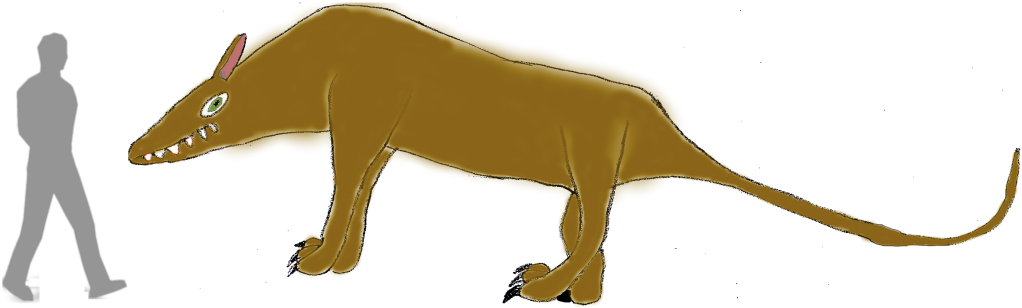
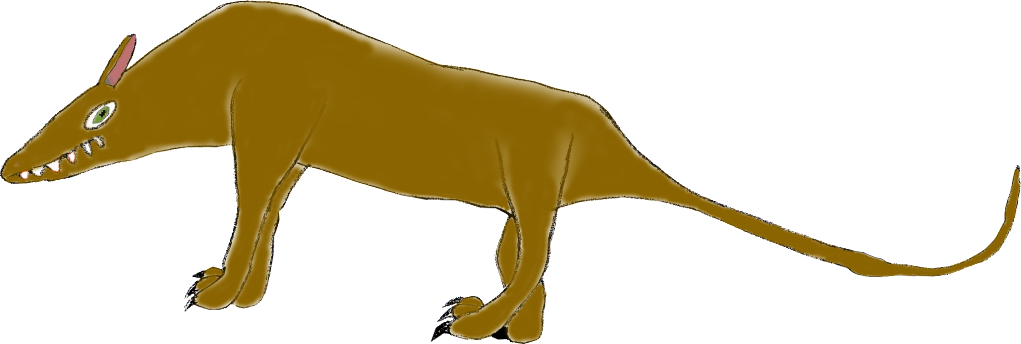
Common Name: Possumena, the opposum on steroids.
Ancestor: Virginia Opossum
Diet: Mostly carrion, also some small animals and grasses.
Range: North America Plains, 90 MYF
Origin of the Latin name: "Hyaena" (hyena), "Sinus" (pocket), and "Maximus" (large). The name together forms "Large Pocket Hyena (referring to the pouch).
The biggest member of the genus Hyaenusinus, they can grow to a hulking 7 feet tall. The second biggest species is a mere 4 feet tall.
Hyaenusinus Maximus is a general scavenger, but it'll also hunt its own prey if needed, similar to the Entelodonts, which occupied the same stretch of land 130-110 million years before. They also have the characteristics of entelodonts - the giant shoulders, ability to run fast, and giant powerful mouth.
Like the Thylacine, the males have a pouch to protect their genitals from the hard grass. They are vicious to everything, including its own species, except for males to females and vice versa. The females go in heat 3 times a year, and consequently raise 3-6 young a year. While you may think it causes overpopulation it is fixed by cannibalistic adults (everyone except their own mother) and herbivores who will try to trample the young, like wilderbeest with lion cubs.

Secondary/Quaternary Consumers
Ferumsus
Common Name:
Ungufox
Ancestor: Pigs
Diet:
Small animals
Origin of the Latin name: "Ferum"
(sword) and "Sus" (pig). They go together to form "Sword Pig", referring
to their saber teeth.
Ferumsus are small carnivore pigs. They grow
to be up to 2 feet tall.
Ferumsus are great runners and diggers,
and will stop at nothing except a larger predator to get what they want.
They have long tusks, which they use to jab at smaller and faster prey
to let them bleed to death, before catching up to it and eating it.
Ferumsus
are very social. While they don't form packs, they will actually play
with any neighboring Ferumsus to increase their hunting prowress.
