Primary Consumers
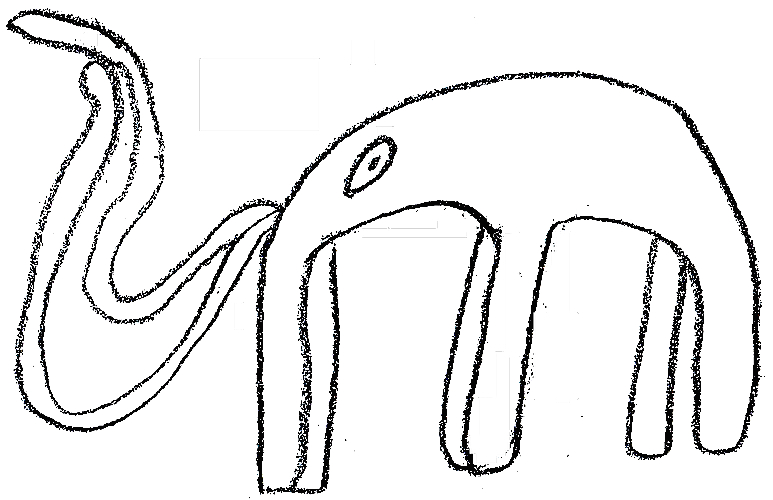
Birdaton/Junglefowl: A quadrupedal bird, their back feet is webbed like the feet of a Jacanasaurus, and the front feet are spread out to prevent sinking. They grow to 20 feet long, or 13 feet tall.
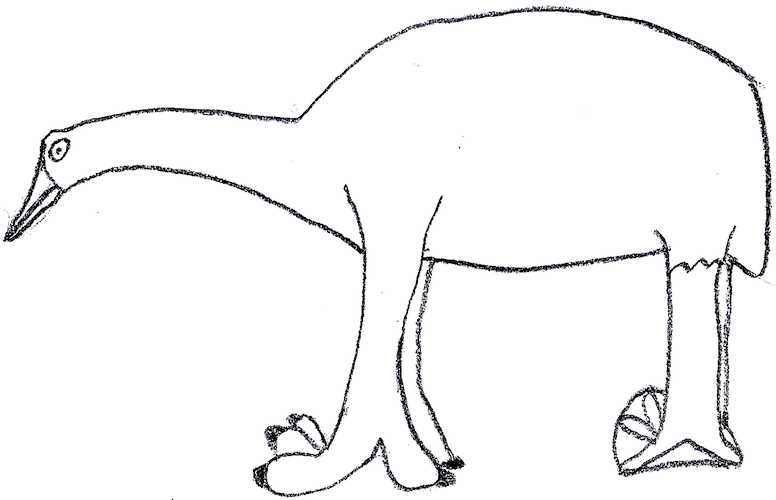
Triceragecko/Geckos: A large terrestrial rodent gecko, it has 3 horns and a crest like the Jackson's Chameleon of today. It feeds on grasses and aquatic plants and has a long neck to reach into the water. It is 4 feet tall. While it has few predators, the large theriumonitors and pangolin theropods still prey on it. It is also vulnerable to octosuchians when feeding in the water.
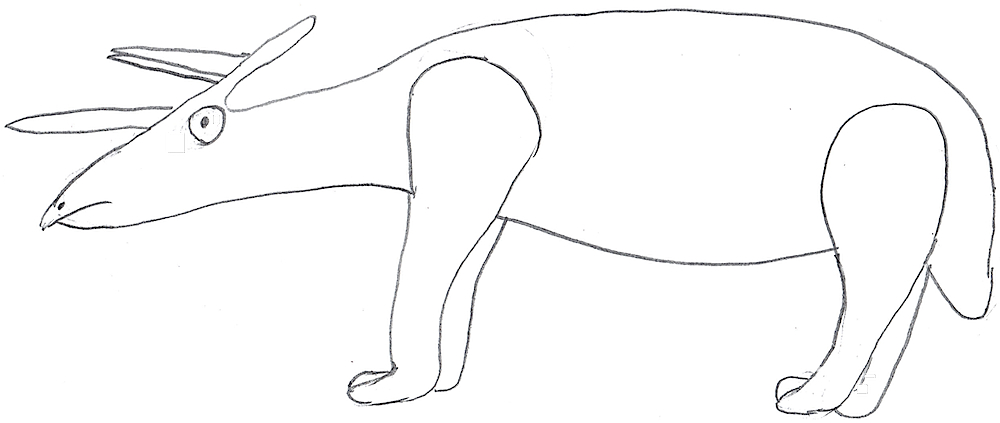
Turtlepottamus/Testudines: A turtle that resembles the sea turtles of today, they fill the niche of hippos. They have a flat body to float on the surface and a long neck to reach down to aquatic plants and land plants without ever having to stop floating. They grow up to 20 feet long, but most are smaller.
Primary/Tertiary Consumers
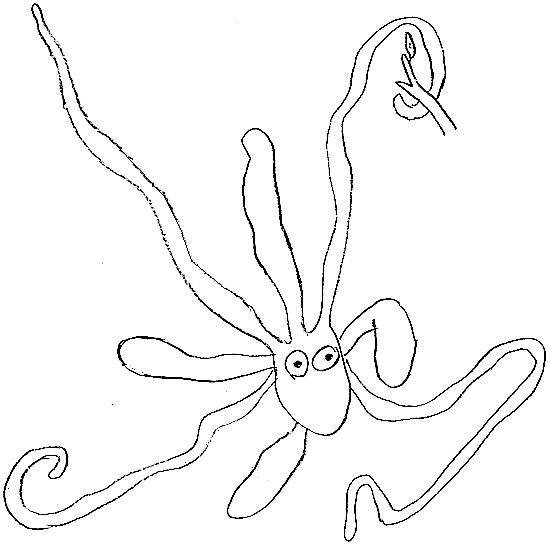
Herbipus/Octopi: An omnivorous Hexapus, the first. It
has evolved a long gut to process the plant and evolved symbiosis with
bacteria that breaks down the plants, similar to the bacteria in the
guts of tetrapods.
Beaver Crab/Coconut Crabs: A 2 foot long ground megacrab, they form family groups to protect their young. They form dams like beavers from their serrated pincers to form a pool to protect their planktonic young. Then they protect their young and family members while molting, so they only fill 1 ecological niche in their lifetime. The mothers still have pouches to refresh the water for plankton and algae.
They are omnivores, leaning more on the carnivore side. They feed on fallen fruits, leaves from a specific future plant, and meat ranging from terrestrial octopi, antechinus, insectivore mice, other large arthropods (since the oxygen levels way higher), and carcasses. Only the biggest carnivores won't give up a carcass from a beaver crab family because of their serrated pincers.
Tertiary/Quarternary Consumers
Abdominal Swampman/Carnivorous Primates: A carnivorous primate (the only primates in 120 MYF), it has gone to the ground, like the apes of today. It eats fish, and has a long snout to reach down in the water. It can also go in a semi-theropodal stance to catch fish with their bare hands. They grow to be 6 feet long.
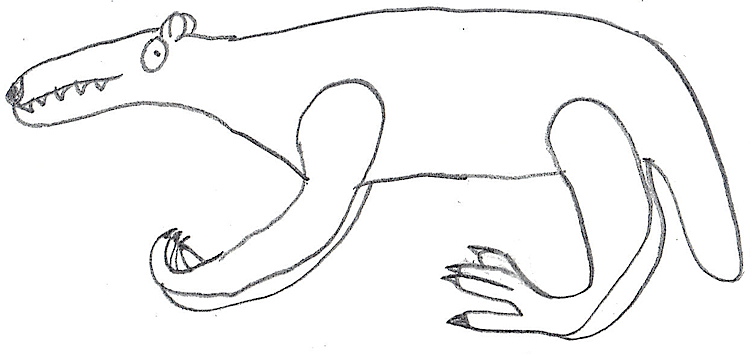
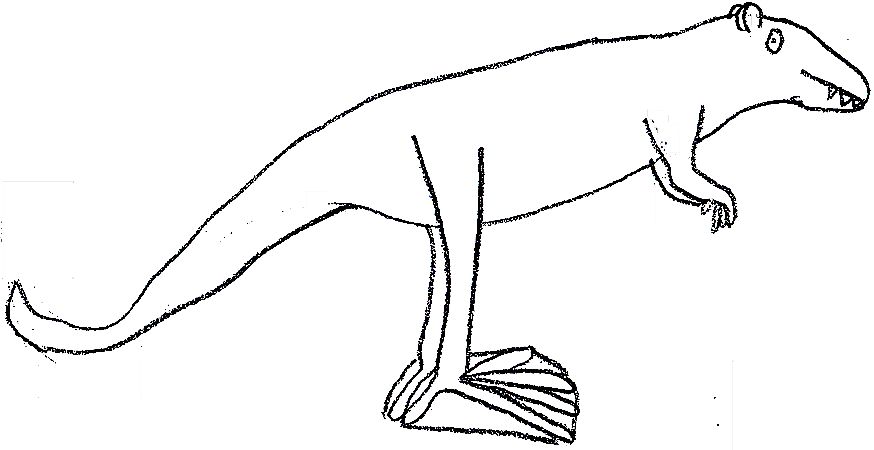
Jacanasaurus/Pangolins: A neo-theropod, they have long webbed toes to prevent falling to the swamp. They eat fish or any aquatic animal they can catch, similar to Spinosaurus. They grow to 20-30 feet long.
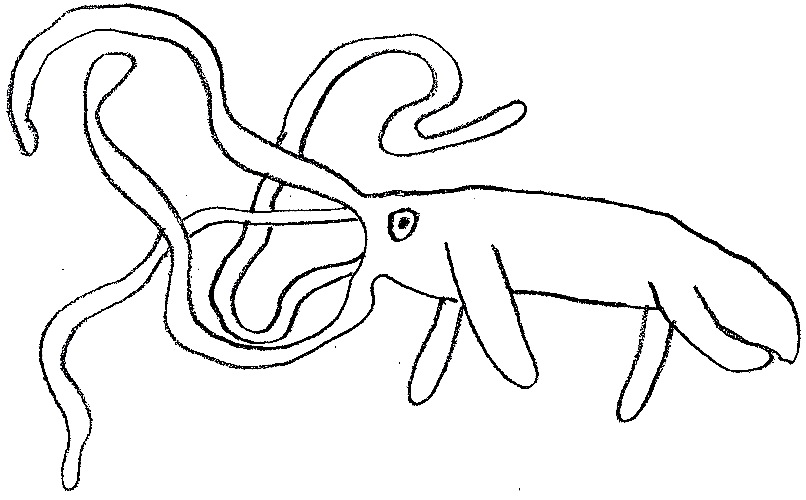
Octosuchus/Octpi: The ambush predator flipper-feet, they are 10 feet long (excluding tentacles) and have an elongated body with 4 strong flippers that they can use to haul themselves on the land to sleep, breed, rest, and chase prey. They swim with an up-down motion like Ceteceans. Their main way to catch prey is to grab them with their tentacles. They can breathe through their skin to lengthen their stay underwater.
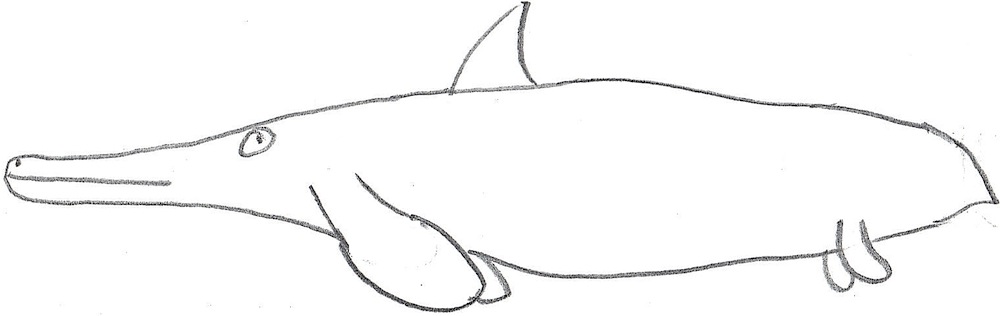
River Theriumonitor/Monitor Lizards: An aquatic dolphin-like theriumonitor, it fills the niche that river dolphins have today. It can grow to be up to 20 feet long, but is usually shorter.
Tree Octopus/Octopi: An arboreal octopus, they are an early split off the land octopi tree. They have 4 long tentacles to swing, and 4 shorter, thicker, sticky tentacles for climbing trees. Their mouth is extendable and they are extremely poisonous.
Coconut Crabs:
Pulmoncers/Coconut Crabs: Descendants of coconut crab, they have diversified. Most live in the trees, but some are strict ground dwellers. They live in dens underground, where they sleep, do their molting (it takes a month), and have their young. Their young live in pools made by their mother, safe from aquatic predators. The mother has a special pouch for water during the period to refresh the water and feed it plankton and algae.
They range from sizes of 5 inches long with leg spans of 1.5 feet to 3 feet long with leg spans of 9 feet. They also range in diets as adults, but as larvae and adolescents they fill different niches.
The larvae feed on plankton and algae. When they first go on land they feed on fruit and rotting meat, and make their way up and get more specialized to their adult diet.
The ground crabs look a lot like today's coconut crab. The tree crabs have flexible legs to hang in the trees upside down (as they don't have anything to grasp it with besides the leg itself) and long eyestalks to have a wide range of vision. All tree crabs have strong pincers and while all carnivorous ground crabs have strong pincers too, the herbivorous ground crabs don't.
The tree crabs move in the trees by sliding their legs while hanging upside down, when they have to go to a new branch they grab on to the branch (hence their strong pincers), and if after they test it it's strong enough to hold them they "jump" to the branch (while still holding on) and continue going.
While they have a strong exoskeleton, they still have predators. Their only predators are carnivore primates and other predators at least twice as big as them. They are immune to the bite of most terrestrial octopi. They actually need the venom protection not to prevent being hunted, but to prevent fatal bites while hunting the terrestrial octopi.
The tree crabs are called Climberbugs and the land ones are called Megacrabs.
Land Octopi:
The land octopus are a diverse group of cephalopods descended from a freshwater octopus. After the 90 MYF extinction they had the chance to radiate onto land, and currently live throughout the swamps of Asia and Australia. They have 2 groups: The tree octopi and flipper-feet. The flipper feet are divided into 3 groups: The octosuchians, tetrapi, and hexapi. They all have advanced chromatophores which they can use to camouflage themselves or display bright colors to warn predators. All also have some extent of poison.
Able to live in Freshwater. They eat more often or even lick rocks to get their daily salt intake.
A lung. The evolved s lung from the Pallial Cavity. Most can still breathe through the skin, but only the octosuchians can get a significant amount of air through it,
Skeleton. All but the tree octopi have a primitive skeletal system derived from their radula. Most of the skeletal system is in the legs, but they have a primitive rib cage. In the octosuchians their flipper bones are more like cartilage for flexibility. None have bones in their tentacles.
Water Retination. They have leathery skin that can hold water for 1-5 days (depending on species) without them drying out,
Good Oxygen Carrier. Their hemocyanin has changed a little so that it's more ready to give up oxygen. They're blood is still blue or transparent.
They descended from a freshwater octopus. Eventually the freshwater octopus split into 2 lineages: 1 into the Tree Octopus and the other into the flipper-feet. The flipper-feet then split into 2, one split taking some ambush predator niches and the other lineage became more terrestrial, eventually developing a proto-skeleton. Then some became the tetrapi, while some split off and another pair of tentacles became legs, becoming the hexapi.
 Hexapi: