PRIMARY CONSUMERS
Horsefish/Guitarfish: 3-8 feet long herbivorous guitarfish descendants. They have become more streamlined to swim faster. Their diet is composed of plankton, algae, and plantslugs.

Plantslugs/Elysia Chlorotica: A sponge-looking reef building photosynthesizing sea slug descended from Elysia Chlorotica. They feed by a modified radula, which now is used to filter feed. It has also extended outside of its mouth, to be able to filter feed more.

Ray Squid/Squid: Plankton feeding squid, their 9th and 10th tentacles have merged with their side structures to form ray-like wings. Their wingspans can reach from 30-60 feet. They are actually primitive ancestors of squids like the Whalosquid.

Trilobugs/Woodlice: Trilobite-looking descendants of woodlice.

Whaleray/Skates: A small order of filter feeding rays. Their wingspans reach from 10-50 feet. They fill a role similar to filter feeding sharks with whales today.

PRIMARY/TERTIARY CONSUMERS
Volafrontusa
Common Name:
Birfish
Ancestor: Flying Fish
Diet:
Arthropods
Range: The ocean of 200 MYF
Origin
of the Latin name: "Volatis" (flying), "Frons" (front), and
"Artus" (limb). The name together forms "Front-limb flyers".
With the
90 MYF extinction, some islands were wiped from tetrapod life, and with
the flooding of the world they never returned, and the main inhabitants
became arthropods. Which leaves a niche open. A niche filled by a
descendant of the flying fish of today.
The Birfish are an order
of fish that like their name, can fly. Their pectoral fins became
adjusted for rapid beating and the fins became enlarged. Thus they fly
like hummingbirds.
They come in large flocks everyday to feed on
the arthropods that live there. They can't actually breathe though. They
live in the water. To stay out of the water they breathe through the
skin, which supplies enough oxygen to their small bodies. They still
need it wet, so they can only stay about an hour out of the water at a
time.
Coral Star/Brittle Star: A reef building descendant of brittle stars, their arms have become long and wavy and point upwards while the "brittles" have also become long and wavy.

Whalosquid/Squids A 200 foot long squid descendant. Its beak has become like baleen, and it uses its wider tentacles to form a cup shape to trap the plankton. It also eats any animals that may be caught in it or that it can catch (it has tentacles over 100 feet long) and also eats aquatic plants, algae, and plantslugs. They are members of the filter feeding squid, which take the role of baleen whales in 200 MYF.

TERTIARY/QUARTERNARY CONSUMERS
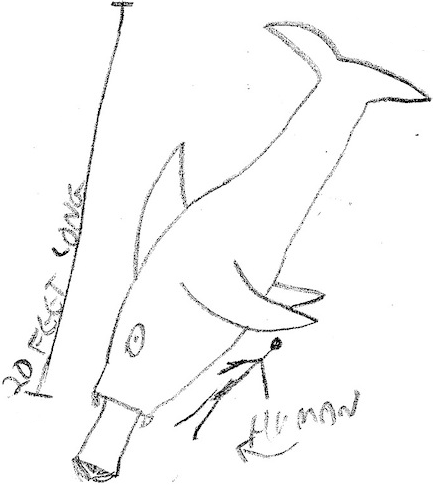
Dolphin Shark/Sharks: A shark that replaces dolphins in 200 MYF. It is 20 feet long and the front row of teeth has become extendable to grab critters off the sea floor.
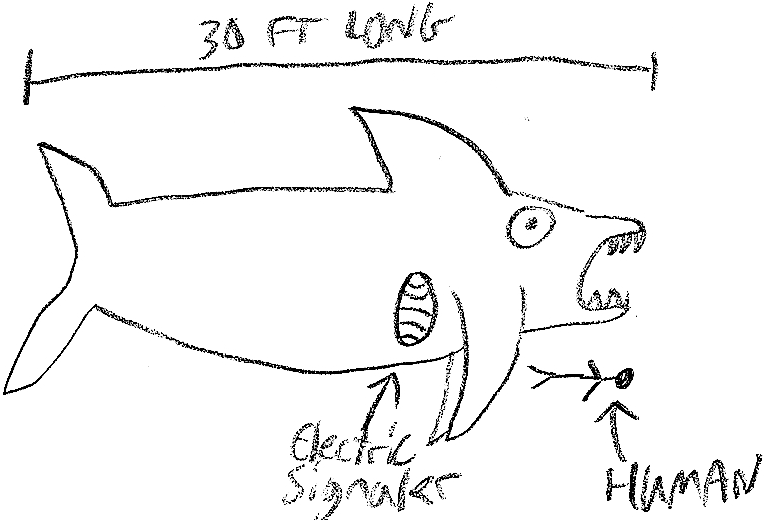
Pack Shark/Shark: A 30 foot long shark that roams the oceans in 200 MYF. It still looks like a normal shark except for its electric gland, which is what it uses to communicate with its other pack members.
Sea Mantis/Mantis Shrimp: Seascorpion-like mantis shrimp. Their forelimbs still have only a spike though. They have become eficient predators for the prey they can catch. They range in size of 5 inches to 3 feet, being able to grow so big because of the increased amount of oxygen in the sea.
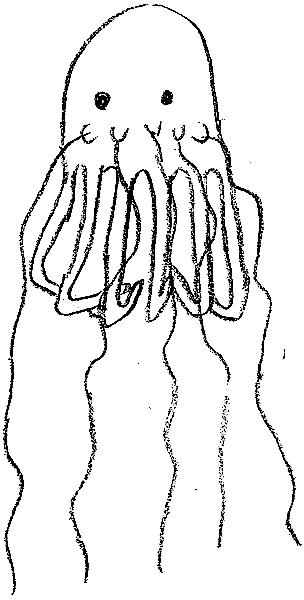
Trapjellies/Box Jellyfish: A box jellyfish descendant. It has evolved some tentacles which are stiff and in the shape of a cage, an advanced swimming (probably expulsion) system and guiding system, and still has the tentacles that sting to kill its trapped prey and pull it to its mouth.